Sustainability in E-commerce: How Marketplaces Are Going Green

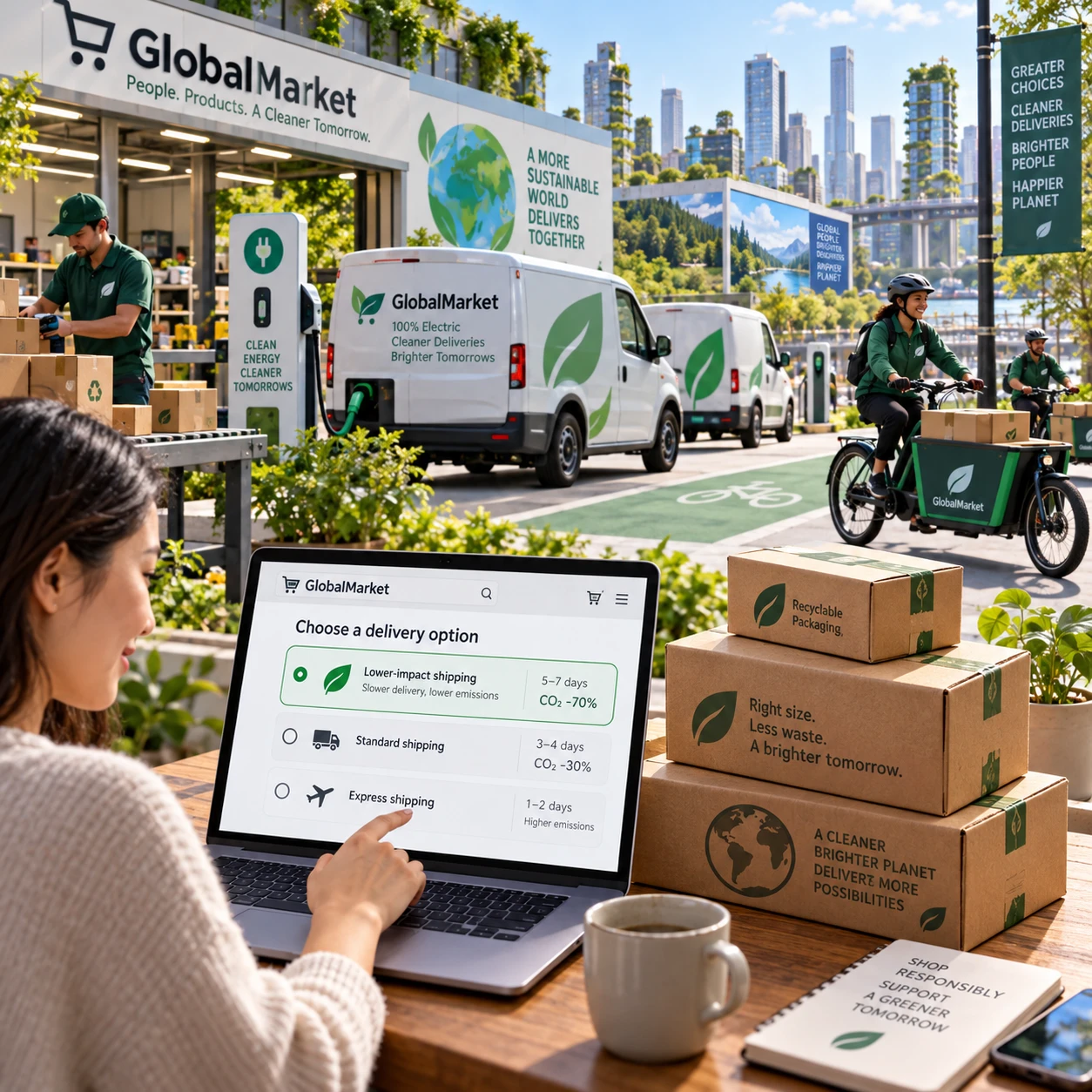
Online shopping can save shoppers a trip to a store, but it still uses energy, materials, transport, and labor. Every order has an environmental footprint shaped by where a product is made, how it is packaged, how it reaches the customer, and whether it is returned.
That gives e-commerce marketplaces an important role. They connect buyers, sellers, warehouses, and delivery companies, and can influence choices across the shopping journey. The strongest sustainability efforts address the whole system, measure results clearly, and avoid treating a green label as proof of impact.
Why sustainability matters for e-commerce marketplaces
Sustainability matters for e-commerce marketplaces because online retail can generate carbon emissions, packaging waste, and transport impacts at every stage of an order. Marketplaces can help reduce those effects by changing how products are listed, packed, shipped, and returned.
The environmental impact depends on more than the moment a parcel arrives. Product manufacturing often contributes a large share of a product’s footprint, while warehousing, data infrastructure, packaging, and delivery add further impacts. Returns can mean extra transport and handling, and some returned goods may be difficult to resell.
Marketplaces have leverage because they set platform rules and shape what buyers see. They can give sellers practical guidance, improve access to lower-impact shipping options, and present useful product information at the point of purchase. Their reach also creates responsibility: a small design choice repeated across millions of orders can have meaningful consequences.
Still, online retail is not automatically worse or better than shopping in person. A consolidated delivery may replace several individual car trips, while a rush order with unnecessary packaging may increase emissions. The outcome depends on customer behavior, local transport, delivery density, product type, and the efficiency of the supply chain.
Greener delivery and logistics
Marketplaces can reduce delivery emissions by consolidating orders, improving shipping efficiency, and supporting low-emission transport. The biggest gains often come from avoiding unnecessary trips and making the last mile more efficient.
Last-mile delivery, the final leg from a local depot or store to the customer, is difficult to optimize because it involves many stops, dispersed addresses, and tight delivery windows. Marketplaces can encourage customers to choose flexible delivery dates, pickup points, or combined shipments when those options fit their needs. A parcel locker or collection point can reduce repeat delivery attempts, though customers may need to travel to collect an order.
Logistics providers can also use route planning, well-loaded vehicles, cargo bikes, and electric vans. These measures work best in suitable locations: electric vehicles need charging access and cleaner electricity to deliver stronger climate benefits, while bikes are most practical for compact urban routes. Rural delivery networks face different constraints, including longer distances and fewer parcels per stop.
Marketplaces can make lower-impact options easy to compare at checkout. For example, they might show a flexible delivery window alongside an expedited option and explain that faster shipping can limit opportunities to consolidate orders. Avoid promising a precise emissions reduction unless it is based on a transparent, consistently applied calculation.
Reducing packaging waste
Marketplaces can reduce packaging waste by using right-sized parcels, avoiding unnecessary layers, and choosing materials that local recycling systems can process. Reusable packaging can help in some delivery networks, but only when return and cleaning systems are practical.
Oversized boxes and excess void fill use more material and can make parcels take up more space in delivery vehicles. Sellers can select packaging based on product dimensions and protection needs, while marketplace tools can help standardize package sizes or flag frequent overpacking. The goal is not simply the smallest box: fragile goods still need protection, since breakage can create additional waste and replacement shipments.
Material claims need context. Paper, cardboard, and recycled-content packaging may be widely recyclable in some regions, but collection and recycling rules vary. Compostable packaging can cause problems if it enters a conventional recycling stream or if local composting facilities do not accept it. Clear disposal instructions are more useful than a broad claim that a package is “eco-friendly.”
Reusable packaging may reduce single-use waste when customers can return it easily and the package completes enough trips to offset its production and reverse transport. That makes reuse a system question, not just a material choice. For a global marketplace, regional pilots can reveal whether return rates, distances, and cleaning requirements make reuse workable before expanding it.
Making returns and product lifecycles more sustainable
Marketplaces can make returns and product lifecycles more sustainable by preventing avoidable returns and keeping products in use through resale, repair, refurbishment, or recycling. These circular-economy options can reduce waste, although their value depends on product condition and the resources needed to process them.
Accurate product descriptions, reliable sizing details, clear images, and answers to common questions help customers choose correctly. A better fit reduces the chance of returns caused by mismatched expectations. However, marketplaces should not make return policies so restrictive that shoppers cannot resolve legitimate defects or ordering errors.
When a return does happen, the next step matters. A product in sellable condition may go back into inventory; a damaged item might be repaired or refurbished; and only products that cannot be reused should move toward responsible recycling or disposal. Reverse logistics—the movement of goods from customers back through the supply chain—needs inspection, sorting, and clear routing to avoid unnecessary handling.
Marketplaces can support circular options by letting sellers offer spare parts, repair services, refurbished goods, or resale listings. They can also create consistent condition descriptions so customers understand what they are buying. These services may take extra coordination and can be harder to scale than standard fulfillment, but they extend product life and give buyers alternatives to purchasing new items.
How marketplaces can engage sellers and shoppers
Marketplaces can engage sellers and shoppers by setting practical seller standards, sharing credible sustainability information, and making lower-impact choices visible without overstating their benefits. Clear expectations and usable tools matter more than a badge that lacks evidence.
Seller guidance can cover packaging dimensions, material selection, product durability information, and return handling. Standards should be specific enough to act on and proportionate to seller size; a small business may need templates or training rather than a complex reporting burden. Marketplace teams can also explain what evidence is required for environmental claims and remove claims that cannot be substantiated.
For shoppers, useful information is specific and relevant to the decision. A listing might explain a product’s repairability, recycled content, or available refurbished option. A delivery page can show flexible shipping choices. These details help people make sustainable consumer choices, but they should not imply that buying a new product is automatically sustainable simply because one feature is improved.
Marketplaces should distinguish verified product attributes from broad marketing language. A seller’s claim about recycled content, for instance, should identify what part of the product contains it and what supporting documentation is expected. Standards and definitions vary across regions, so platforms operating globally need rules that are understandable locally and consistent enough for shoppers to compare.
Measuring progress and addressing trade-offs
Marketplaces can assess sustainability by tracking emissions, packaging, delivery, and returns with clear boundaries and consistent methods. Transparent measurement helps separate effective action from claims that sound green but lack evidence.
Useful indicators may include greenhouse gas emissions from operations and delivery, packaging material per order, the share of orders using lower-emission delivery options, delivery consolidation rates, and the proportion of returned products resold or repaired. Metrics should state what is included, such as whether they cover marketplace-controlled warehouses, third-party sellers, or contracted carriers. Reporting a change without disclosing the baseline or scope can mislead readers.
There are real trade-offs. Faster delivery can reduce the time available to combine orders; reusable packaging requires collection and cleaning; and detailed seller reporting can add cost and administrative work. A marketplace should test measures in relevant regions, compare the full system impact, and report where a solution works less well. A reduction in one category should not conceal a rise in another.
Greenwashing risk grows when platforms use broad labels such as “green delivery” without explaining the criteria. Shoppers can look for specific evidence: what the claim measures, who verifies it, whether it applies to the whole product or one attribute, and whether the marketplace reports progress over time. Sellers and logistics providers should be held to comparable standards where the platform makes claims on their behalf.
For marketplace teams, a practical review is to ask three questions: What part of the shopping journey creates the impact? Which partner can change it? What evidence will show whether the change worked? That approach keeps sustainability tied to decisions across sourcing, delivery, packaging, and product life rather than reducing it to a single initiative.