How to Optimize Product Listings for International E-commerce Markets

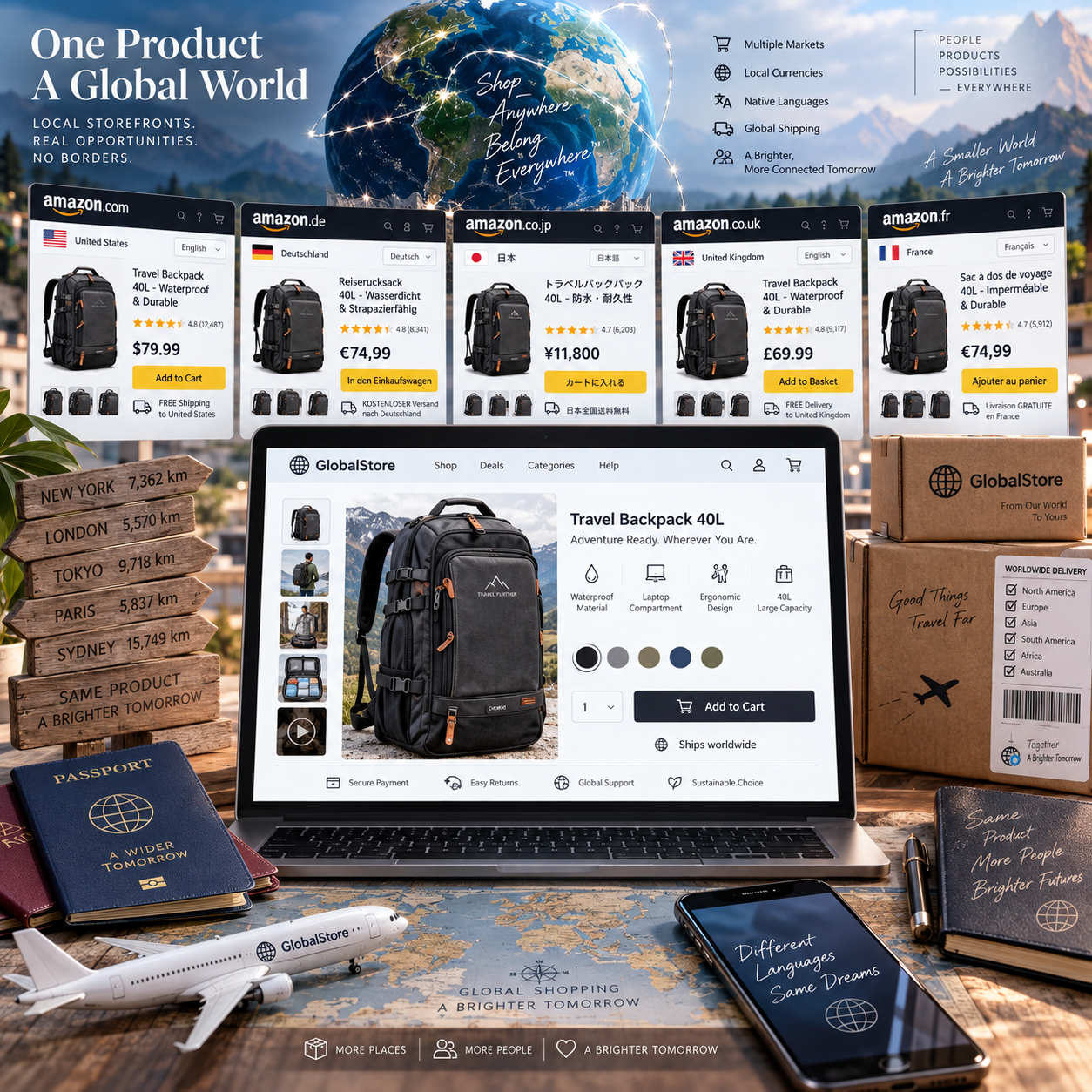
International product listings need more than translated copy. They must match each market’s language, search behavior, buying expectations, legal requirements, pricing conventions, and delivery concerns. A listing that performs well in one country may receive few clicks or create avoidable returns in another.
The practical approach is to keep your core brand promise consistent while adapting the details customers use to find, evaluate, and purchase the product. The workflow below covers product title localization, international SEO, product data, images, pricing, shipping, customer reviews, and ongoing testing.
Understand Each Target Market Before Listing
Before creating an international listing, research the target market’s language, buyer expectations, search behavior, regulations, and purchasing habits. This preparation helps you adapt the offer instead of publishing a domestic listing with translated words.
Start by defining the market-specific buyer persona. Consider who buys the product, what problem they want to solve, which features matter most, and what may prevent them from ordering. A shopper buying kitchen equipment may prioritize capacity in one market and energy efficiency or compact storage in another.
Review local competitors on the marketplace where you plan to sell. Record how leading sellers structure product titles, which attributes they highlight, what questions appear in customer reviews, and how they explain delivery and returns. This is useful market intelligence, but copying competitors’ claims or wording can create compliance and intellectual-property risks.
- Identify the preferred language and regional vocabulary.
- Check local measurement conventions, sizing systems, and electrical standards.
- Study common payment methods, delivery expectations, and return habits.
- Review restricted-product rules, labeling requirements, and marketplace guidelines.
- Note cultural preferences in color, imagery, tone, and product use cases.
Use official guidance for legal and customs questions. For example, the U.S. International Trade Administration provides export and market information, while marketplace policies remain the final authority for listing compliance.
Localize Product Titles and Descriptions
Product title localization means rewriting titles and descriptions for natural local usage, not translating each word literally. The localized version should remain accurate, readable, and easy to scan while presenting the product details shoppers expect first.
Build each title around a logical order: brand, product type, defining feature, size or capacity, color, and compatible model where relevant. The exact order should follow the marketplace’s rules and the way customers search in that country. A literal translation may use grammatically correct words that local shoppers rarely enter.
Product descriptions should answer practical buying questions quickly. Explain what the product does, who it suits, how it is used, what is included, and any important limitations. Use short paragraphs, descriptive subheadings, and bullet points rather than dense blocks of translated text.
Keep translation accurate and commercially natural
Machine translation can accelerate a first draft, but a native-speaking reviewer should check terminology, tone, measurements, idioms, and unintended meanings. The reviewer should also confirm that the title describes the same product as the images, specifications, and packaging.
For example, a clothing listing should localize the size chart and explain whether measurements refer to the garment or the wearer. A home appliance listing may need voltage, plug type, capacity units, and regional terminology. Choosing local clarity over word-for-word consistency usually reduces confusion, although it requires a controlled glossary so the brand remains recognizable across markets.
Build an International Keyword Strategy
An international keyword strategy uses relevant search terms from each target market in titles, attributes, descriptions, and permitted backend fields. It combines local keyword research with accurate product information rather than repeating the same global phrase everywhere.
Research keywords in the language customers actually use. Begin with marketplace search suggestions, competitor listings, customer reviews, support queries, and local keyword tools. Compare formal product names with everyday terms, regional spellings, abbreviations, and category-specific language.
Organize findings into three groups:
- Core terms: the product category and primary use, such as a local equivalent of “insulated water bottle.”
- Feature terms: attributes such as leakproof, stainless steel, adjustable, wireless, or rechargeable.
- Intent terms: phrases that reveal a need, use case, compatibility question, or size requirement.
Place the strongest relevant term naturally in the title, then use supporting terms in bullet points, structured attributes, and the description. Follow each marketplace’s rules for search fields and prohibited claims. Keyword stuffing can make copy harder to read, reduce trust, and create a mismatch between search expectations and the product itself.
Maintain a keyword map for every country. It should include the approved local term, translation notes, product attribute, title placement, and review date. This creates consistency for a multilingual team while leaving room for market-specific search behavior.
Optimize Images, Attributes, and Product Data
International listings perform better when product images, attributes, and specifications remove uncertainty before checkout. Clear visuals and complete data help shoppers understand the product even when language is not their first concern.
Use a consistent image sequence: a clean primary image, several detail views, a scale or dimensions image, a use-case image, and packaging or included-items imagery where helpful. Localize text inside graphics, including units, labels, and instructions. Avoid placing claims in images that the product cannot substantiate.
Product data should be precise and consistent across the title, description, images, variation fields, and inventory system. Localize:
- Dimensions, weight, volume, temperature, and capacity units.
- Clothing, footwear, furniture, and mattress sizing conventions.
- Materials, ingredients, care instructions, and compatibility details.
- Colors and variation names that may have different local meanings.
- Voltage, plug format, certifications, model numbers, and included accessories.
Use a master product information template with separate market fields. Store the original specification, converted value, conversion method, and reviewer approval. That record helps prevent a common operational error: updating a domestic product dimension while leaving an outdated conversion in another marketplace.
Localize Pricing, Shipping, Returns, and Payments
Currency and pricing localization should show customers the amount they are likely to pay, while shipping, returns, taxes, and payment information should set realistic expectations before purchase. Transparency is central to conversion because unexpected costs often cause cart abandonment or negative reviews.
Display prices in the local currency and account for marketplace fees, exchange-rate movement, taxes, duties, promotions, and rounding conventions. A converted price is only a starting point. Check whether the resulting amount looks credible beside local competitors and whether the margin still covers fulfillment and returns.
Explain shipping and delivery information in terms the buyer understands:
- Estimated dispatch time and delivery window.
- Available carriers and tracking arrangements.
- Shipping cost, free-shipping thresholds, or regional exclusions.
- Whether import duties, taxes, or brokerage charges may apply.
- Address restrictions and procedures for failed delivery.
Localize the return policy without overstating rights or making unsupported legal claims. State the return window, item condition, refund timing, return address, and responsibility for return postage according to the marketplace and applicable local rules. Payment options also matter. Support the methods offered by the marketplace and clearly indicate whether installments, digital wallets, or cash-on-delivery options are available.
Choosing a lower headline price can increase clicks, but it may reduce profitability if international fulfillment costs are hidden or underestimated. Model total landed cost before publishing.
Build Trust and Meet Marketplace Requirements
International listings build trust through accurate information, visible customer reviews, reliable support, and compliance with marketplace requirements. Customers need evidence that the product is legitimate, suitable, deliverable, and supported after purchase.
Show ratings and reviews where the marketplace permits them, and monitor market-specific feedback closely. Reviews often reveal localization gaps that keyword tools miss: unclear instructions, confusing sizes, missing accessories, weak packaging, or delivery expectations that were not explained.
Include relevant trust signals such as:
- Verified product specifications and clear manufacturer information.
- Applicable safety certifications, warranties, or guarantees.
- Accurate stock status and dependable fulfillment details.
- Customer support contact routes and response expectations.
- Simple instructions, care information, and troubleshooting guidance.
Audit every listing against the destination marketplace’s guidelines before launch. Check title limits, prohibited wording, category attributes, image requirements, regulated-product rules, intellectual-property restrictions, and claims about health, performance, or sustainability. A high-converting listing is still a liability if it violates local regulations or platform policy.
Measure and Improve Listing Performance
Improve international listings by measuring each stage of the buyer journey: visibility, clicks, product-page engagement, conversion, fulfillment, returns, and reviews. Market-specific data shows whether a problem comes from discoverability, relevance, trust, or operations.
Track a practical performance scorecard for each country:
- Visibility: impressions, search placement, and category exposure.
- Engagement: click-through rate, image interaction, and time on page where available.
- Purchase behavior: add-to-cart rate, conversion rate, and abandoned checkout patterns.
- Experience: cancellation rate, delivery issues, returns, ratings, and review themes.
- Commercial outcome: contribution margin after advertising, shipping, taxes, and refunds.
Change one meaningful variable at a time when possible. Test a localized title, primary image, feature order, size explanation, delivery promise, or price presentation. Allow enough traffic and time for a useful comparison, then document the result in a market log.
A repeatable workflow is the localize, validate, launch, learn cycle: adapt the listing, complete language and compliance checks, publish with a baseline, and use customer behavior to guide the next revision. Do not assume that a change improving one country will improve every country.
Frequently Asked Questions
How do you translate product listings for international markets?
Start with a market-specific translation brief, then localize the title, description, attributes, images, units, and support information. Use machine translation for speed if appropriate, but have a native-speaking reviewer verify terminology, tone, accuracy, and cultural context.
Should product titles be different in each country?
Yes, product titles should usually be adapted for each country’s language, search behavior, marketplace limits, and terminology. Keep the brand, model, and core product identity consistent while changing word order, feature emphasis, units, and local category terms.
How do you choose keywords for a global marketplace?
Research keywords separately in each target language using marketplace suggestions, local competitors, customer reviews, and keyword tools. Select terms that match real product attributes and buyer intent, then place them naturally in approved listing fields.
What product information should be localized?
Localize language, terminology, measurements, sizing, currency, taxes or duties information, shipping times, return instructions, payment details, images containing text, compatibility data, and customer support guidance.
How can you improve conversions on international product listings?
Reduce uncertainty with accurate local copy, strong images, complete specifications, transparent total costs, realistic delivery promises, clear returns, relevant trust signals, and responsive support. Review conversion data and customer feedback by market instead of applying one global change everywhere.