Cross-Border E-commerce: How to Navigate Taxes, Duties, and Regulations

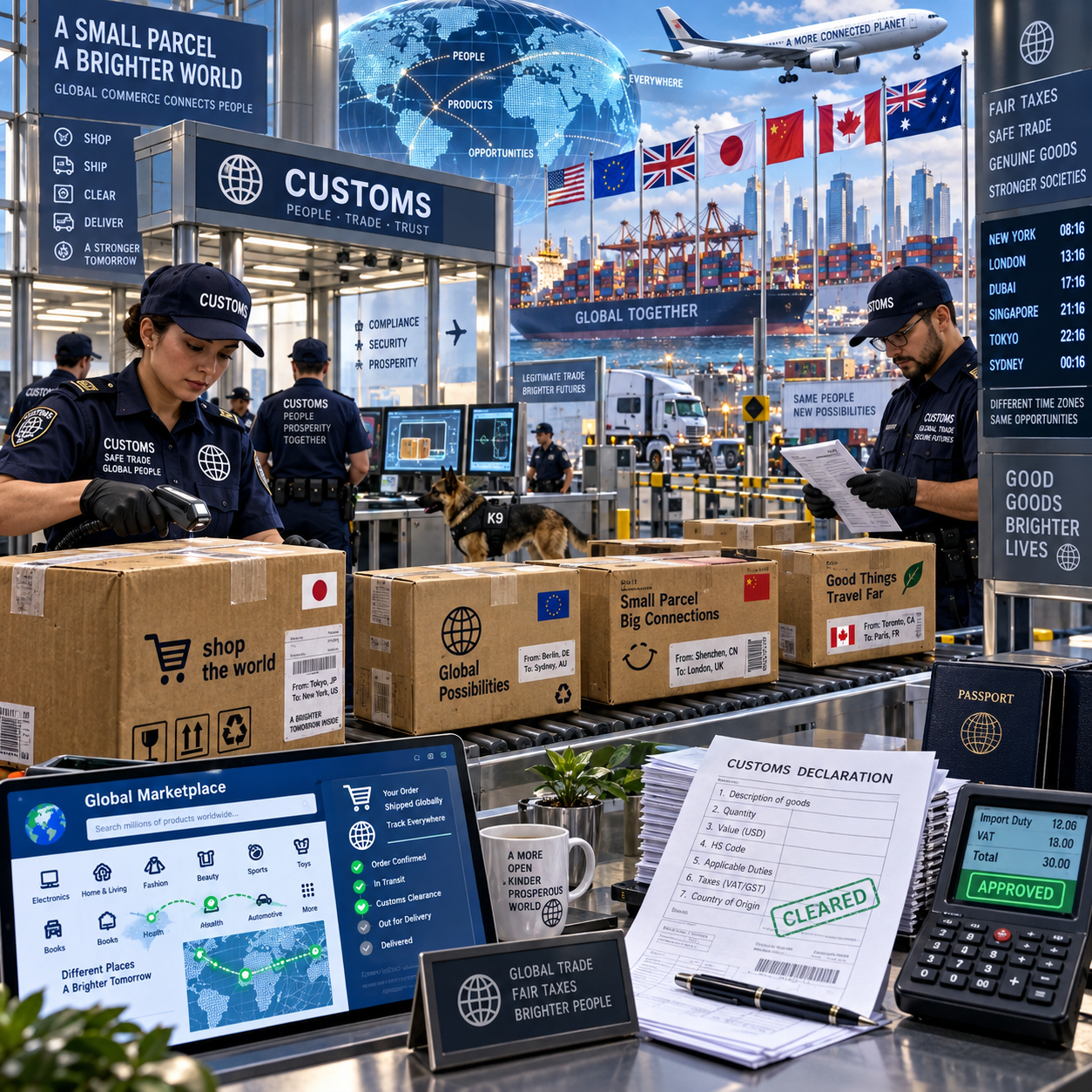
Cross-border e-commerce allows a business or consumer to buy and sell products internationally, but an online checkout does not remove border obligations. The destination country may impose taxes, customs duties, documentation requirements, product rules, and import controls before the parcel reaches the buyer.
Successful international selling depends on accurate product data and clear cost allocation. A seller should know the product’s HS code, country of origin, declared value, destination requirements, and shipping terms before listing it. Buyers should also understand whether the displayed price includes import charges or whether the carrier will collect them on delivery.
Why Taxes, Duties, and Regulations Matter in Cross-Border E-commerce
Taxes, duties, and regulations matter because an international order can create financial, customs, delivery, and product-compliance obligations in both the exporting and importing countries. The same product may have different costs and legal requirements depending on its destination, value, origin, and intended use.
Domestic e-commerce usually involves one tax system and one set of consumer rules. Cross-border e-commerce adds an export transaction, an import transaction, customs clearance, and sometimes multiple tax registrations. A package can therefore be commercially sold but still delayed because its description is incomplete, its value is inconsistent, or the product requires an import permit.
Unexpected charges also create customer-service problems. If a buyer sees a low product price and later receives a demand for VAT, customs duty, brokerage, or handling fees, the buyer may refuse delivery or request a refund. Transparent checkout messaging helps prevent that dispute.
Rules vary by jurisdiction. Customs authorities, tax agencies, consumer-protection regulators, and product-safety bodies may each impose separate obligations. Sellers should verify current requirements with the relevant government authorities rather than treating a marketplace setting or carrier estimate as legal advice.
Understanding the Main Cross-Border Charges
Customs duty is a border charge on imported goods, while VAT, GST, and sales tax are consumption taxes; brokerage and handling fees are separate service charges. The exact rate, collection method, and exemption threshold depend on the destination country and the product.
Customs duties and tariffs
A tariff is a government measure that may describe a customs duty or a broader trade policy applied to imports. Customs duty is commonly calculated using the product’s classification, customs value, and origin. Preferential trade agreements can reduce or eliminate duty for qualifying goods, but the importer may need proof of origin.
VAT, GST, and sales tax
VAT and GST are usually consumption taxes collected at different stages of a supply chain, while sales tax is often charged at the point of sale. Countries may require the seller, marketplace, carrier, or importer to collect the tax. Some systems use destination-based rules, meaning the buyer’s location determines the applicable rate.
A low-value shipment may qualify for a special collection process or relief from customs duty, yet still require VAT or GST. There is no universal low-value rule, so the seller must check the destination’s current threshold and marketplace obligations.
Other import-related charges
- Brokerage fees: charged by a customs broker or carrier for preparing and submitting clearance information.
- Disbursement or advancement fees: charged when a carrier pays import charges before collecting reimbursement.
- Storage and inspection fees: possible when customs holds a shipment or requests additional evidence.
- Excise or special taxes: may apply to goods such as alcohol, tobacco, fuel, or certain electronics.
These charges are not interchangeable. A marketplace that collects VAT at checkout may not collect customs duty or a carrier’s clearance fee. The checkout should state which costs are included, estimated, or payable by the buyer.
How Customs Classification and Country of Origin Affect Costs
HS codes and country of origin affect customs costs because authorities use them to determine the product’s tariff treatment, duty rate, trade controls, and eligibility for preferences. Accurate classification is one of the most important controls in international shipping.
The Harmonized System, maintained internationally through the World Customs Organization, provides a structured code for classifying traded goods. National customs schedules often extend the international code with additional digits. A cotton shirt, an electronic component, and a finished medical device may have very different classifications even when they are sold through the same online marketplace.
Use a precise commercial description rather than a vague label such as gift, sample, or parts. A useful description identifies what the item is, what it is made from, and how it is used. The customs declaration should also contain a realistic transaction value and currency.
Country of origin means where the product was manufactured or underwent the legally relevant transformation. It is not necessarily the country from which the parcel is shipped. A product assembled in one country with components from several others may require a formal origin analysis.
Incorrect data can cause reassessment, penalties, seizure, or delays. It can also prevent a shipment from receiving a trade-agreement preference. When classification is uncertain, ask the destination customs authority about an advance ruling or consult a qualified customs professional.
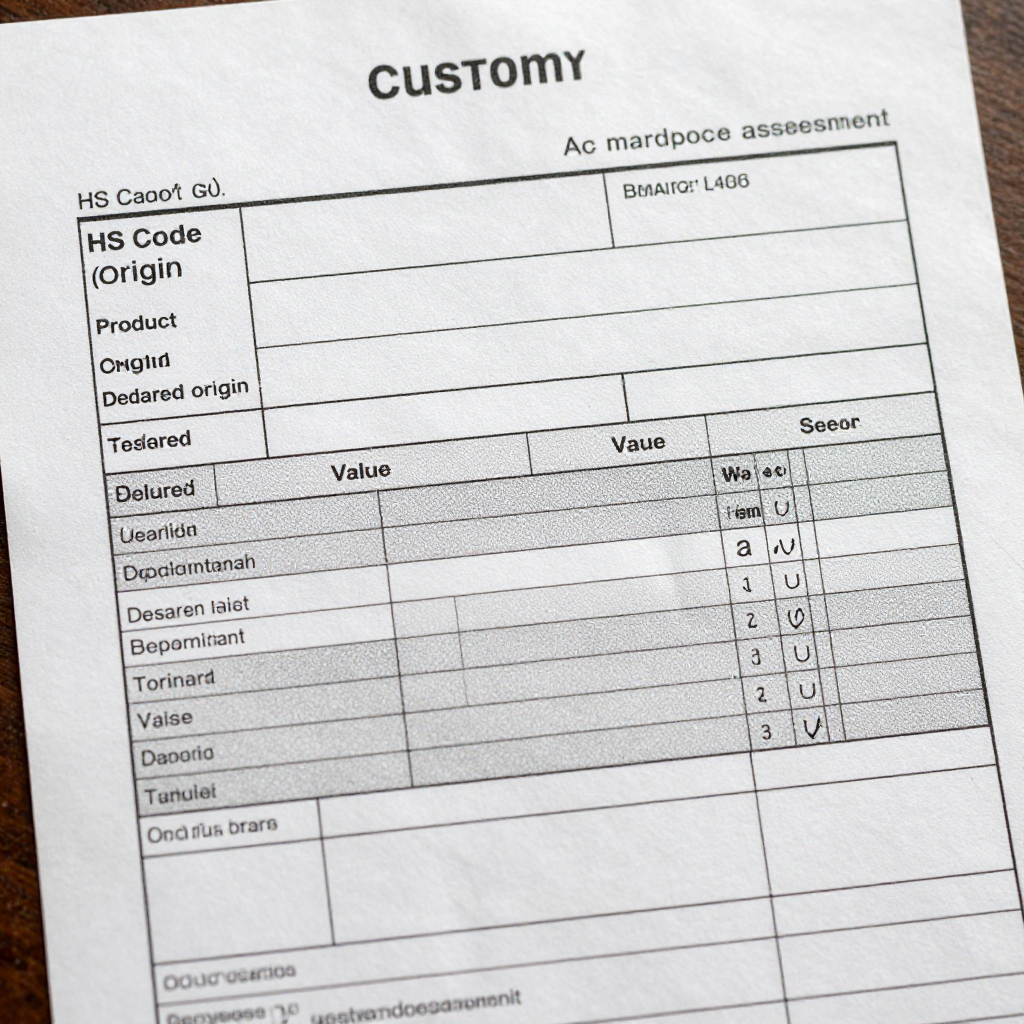
Seller, Marketplace, and Buyer Responsibilities
Responsibility depends on the destination law, sales channel, shipment model, and importer of record. A seller, marketplace, carrier, and buyer may each handle different parts of tax collection, customs clearance, payment, and product compliance.
Seller responsibilities
Sellers generally need to provide accurate product information, invoices, customs declarations, origin details, and shipping data. Depending on the destination, they may also need tax registration, VAT or GST reporting, local product labeling, consumer-law compliance, or an appointed representative.
Marketplace responsibilities
Some jurisdictions make online marketplaces responsible for collecting and remitting certain sales taxes, VAT, or GST. A marketplace may calculate tax at checkout, but that does not automatically eliminate the seller’s obligations for product safety, export controls, customs accuracy, records, or tax reporting.
Buyer responsibilities
The buyer may act as the importer of record and pay import VAT, GST, customs duties, brokerage, or inspection charges. In other arrangements, the seller or logistics provider assumes that role. The terms shown at checkout should identify who pays and who supplies information to customs.
Businesses should retain invoices, shipping records, tax calculations, classification evidence, origin documents, and proof of remittance for the period required by each applicable jurisdiction. Recordkeeping becomes especially important when a marketplace changes its tax-collection model.
Shipping Terms and Calculating the Landed Cost
Landed cost is the total cost of getting a product to its destination, including the item price, transport, insurance where applicable, duties, taxes, and clearance-related charges. Incoterms determine how delivery risk, transport costs, and customs responsibilities are allocated between seller and buyer.
Under duties-paid arrangements, often associated with Delivered Duty Paid, the seller typically organizes import clearance and pays applicable import charges, subject to the specific contract and local law. Under duties-unpaid arrangements, such as Delivered at Place, the buyer may pay import taxes, customs duty, and clearance fees when the shipment arrives.
Incoterms do not decide every tax obligation or replace local regulations. They define commercial responsibilities between the parties, while customs law determines who may legally act as importer of record. A seller should confirm that its chosen delivery model is operationally and legally available in the destination.
A practical landed-cost formula is:
Landed cost = product price + origin handling + international transport + insurance + customs duty + import tax + brokerage and clearance fees.
For example, a seller can display a product price with an estimated landed cost at checkout, then state whether the amount is guaranteed or subject to customs assessment. Choosing duties-paid shipping improves price certainty for buyers, but it may increase the seller’s administrative burden and require local tax or customs arrangements.
Key Regulatory Checks Before Listing or Shipping
Before listing or shipping, verify product safety, labeling, restricted-goods rules, documentation, data obligations, and destination-specific registrations. Tax compliance alone does not make an international product sale lawful.
- Product safety: Check standards, conformity assessments, certificates, recalls, and responsible-person requirements for the destination market.
- Labels and instructions: Confirm language, warnings, units of measurement, ingredients, age grading, recycling marks, and manufacturer information.
- Restricted goods: Review rules for batteries, chemicals, cosmetics, medicines, food, alcohol, plants, animal products, weapons, and counterfeit or protected goods.
- Shipping documents: Prepare commercial invoices, packing lists, permits, certificates of origin, and transport declarations where required.
- Data and consumer rules: Check privacy notices, payment-data handling, returns, warranties, product claims, and distance-selling requirements.
- Registration and reporting: Determine whether the seller must register for VAT, GST, sales tax, extended producer responsibility, packaging, or environmental schemes.
Product compliance can change by variant. A rechargeable device, for instance, may need both electrical-safety evidence and dangerous-goods transport documentation. Confirm requirements before accepting orders, especially when using fulfillment centers in multiple countries.
A Practical Compliance Checklist for Global Sellers
A reliable cross-border compliance process starts with destination research, then connects tax settings, product data, logistics, documentation, and ongoing review. Use the following checklist before opening a new international market.
- Map the destination: Identify customs authorities, tax agencies, import thresholds, prohibited goods, consumer rules, and required registrations.
- Classify every product: Assign the correct HS code, document the reasoning, confirm country of origin, and review trade-agreement eligibility.
- Choose the tax model: Determine whether the seller, marketplace, carrier, or buyer collects VAT, GST, sales tax, or import charges.
- Set checkout disclosures: Explain estimated or included taxes, duties-paid or duties-unpaid delivery, brokerage fees, returns, and possible customs requests.
- Prepare customs documents: Match the invoice, declaration, product description, value, currency, quantity, and HS code to the actual shipment.
- Select logistics partners: Ask carriers and brokers who acts as importer of record, how charges are advanced, and how exceptions are handled.
- Maintain records: Store transaction data, tax calculations, declarations, certificates, permits, delivery evidence, and customer communications.
- Test the buyer experience: Place sample orders or review destination-specific checkout flows to identify surprise charges and missing documents.
- Review periodically: Recheck rates, thresholds, marketplace policies, product regulations, and trade-agreement rules at least quarterly or when expanding the catalog.
Automation can reduce repetitive errors, but it cannot validate every classification or regulatory decision. Tax engines, marketplace tools, customs brokers, and legal advisers each cover different parts of the process. For official guidance, sellers can consult the World Customs Organization’s Harmonized System resources and the customs or tax authority in the destination market.
Frequently Asked Questions About Cross-Border E-commerce
Who is responsible for paying import duties in a cross-border transaction?
The responsible party depends on the shipping terms, contract, destination law, and importer-of-record arrangement. With duties-paid delivery, the seller usually manages import charges; with duties-unpaid delivery, the buyer commonly pays them. Always check the order terms rather than assuming the marketplace collects every charge.
What is the difference between VAT, GST, and customs duty?
VAT and GST are consumption taxes, while customs duty is a charge assessed on imported goods. VAT or GST may be calculated using the product value plus transport and duty, depending on local rules. Sales tax is another consumption-tax model used in some jurisdictions.
How do HS codes affect international shipments?
HS codes identify the type of goods for customs purposes. They influence duty rates, import controls, documentation, and trade-agreement treatment. An inaccurate code can create delays, reassessment, penalties, or lost tariff preferences.
What does landed cost include?
Landed cost generally includes the product price, shipping, insurance where relevant, customs duty, import VAT or GST, brokerage, clearance, and other destination charges. The exact calculation varies by country and delivery model.
Can online marketplaces collect taxes on behalf of sellers?
Yes, some marketplaces are legally required or contractually configured to collect and remit specific taxes. That collection usually covers only defined transactions and taxes. Sellers may still remain responsible for product compliance, customs declarations, registrations, records, and taxes outside the marketplace’s scope.